Send the form, and lining up the heat pump tune-up stops being yours to chase.
Set it and leave it alone. A heat pump works hardest when it's holding steady, not when it's chasing a temperature you just changed. Pick the number you want through the cold months, usually somewhere in the mid 60s, and let it run there day and night.
Turning it down when you leave and back up when you get home feels like it should save money. With a heat pump it usually backfires. The system has to work harder to climb several degrees than it does to hold one, and in cold weather that climb can trip the backup heat strip, which costs more to run than the heat pump itself.
If your thermostat has an "emergency heat" or "aux heat" setting, that's backup electric resistance heat, not a boost button. It's meant for when the heat pump can't keep up or isn't running right, not for cold mornings. Leaning on it regularly usually means something needs a look.
Oregon winters ask a lot of a heat pump. It's pulling warmth out of air that might be close to freezing, running longer hours than it does in summer, and doing it without the heavy, humid air that some climates at least bring some relief from. A unit that's low on refrigerant or has a coil caked with frost won't hold its setting no matter where you put the dial, and it'll run up the power bill trying.
That's where maintenance earns its keep, checking refrigerant charge, clearing the outdoor coil, making sure the defrost cycle is actually kicking in when frost builds up. It's not something to sort out by trial and error on your own thermostat.
If you'd rather not spend the next cold stretch calling around, comparing bids, and explaining the same problem to three different companies, you don't have to. Send the form once and the legwork of finding someone qualified is no longer on your plate.
Leave the thermostat where you set it and let the heat pump run steady through the Oregon winter. Bumping it up a few degrees when you walk in cold feels natural, but a heat pump doesn't catch up the way a furnace does. It moves heat slowly and evenly, so a big jump just makes it run longer at full output, straining to close a gap that a steady setting would never have opened. Some systems switch on backup electric strip heat when the thermostat calls for a fast rise, and that backup heat costs more to run than the heat pump itself. Set the number you want to live with, somewhere in the mid 60s works for most homes, and hold it there day and night. The system stays efficient, the house stays even, and you avoid paying for heat you didn't need to ask for all at once.
Why the backup heat kicks in
Every heat pump in Oregon has a backup heat strip for the coldest stretches, and that strip is the most expensive way to warm your house. Setting the thermostat back and then pushing it up several degrees forces the system to call on that backup heat to close the gap fast. Holding one steady number avoids that call almost entirely, because the heat pump alone can keep up with a small, steady demand. Check your thermostat for an "aux heat" or "emergency heat" light. If it's on often, the setting is asking the system to chase rather than hold.
What steady running looks like
A heat pump moves warm air into the house at a lower temperature than a furnace does, so the air coming out of the vents won't feel as hot to your hand. That's normal, not a sign something's wrong. Run it long enough at one setting and the house holds even, with no cold snap after a setback and no blast of heat chasing a jump. Outdoor units also run longer, lower cycles than furnaces do, and that steady pattern is what keeps the compressor working efficiently through an Oregon winter instead of straining to recover lost ground.
Before you get your heat pump maintenanceAfter you get your heat pump maintenance
Finding a pro stops being your job
Fill out one form instead of calling around for a heat pump tune-up.
Send the form and the heat pump tune-up stops being something to remember.
No charge to send it. You decide if you hire them.
Why does your house feel cold even though the heat pump is running
You'll hear it blowing but the air coming out doesn't feel hot like a furnace, it feels lukewarm, and that's normal for a heat pump. What's not normal is if you're bumping the thermostat up and down and the house never quite catches up, or the system runs almost constantly without the room warming. You might notice ice building up on the outdoor unit that doesn't melt off on its own, or the backup strip clicking on more than it should for an Oregon winter. Left alone, a system working that hard wears down faster, and your electric bill carries the cost of all that backup heat running instead of the heat pump doing its job.
Running the way it should
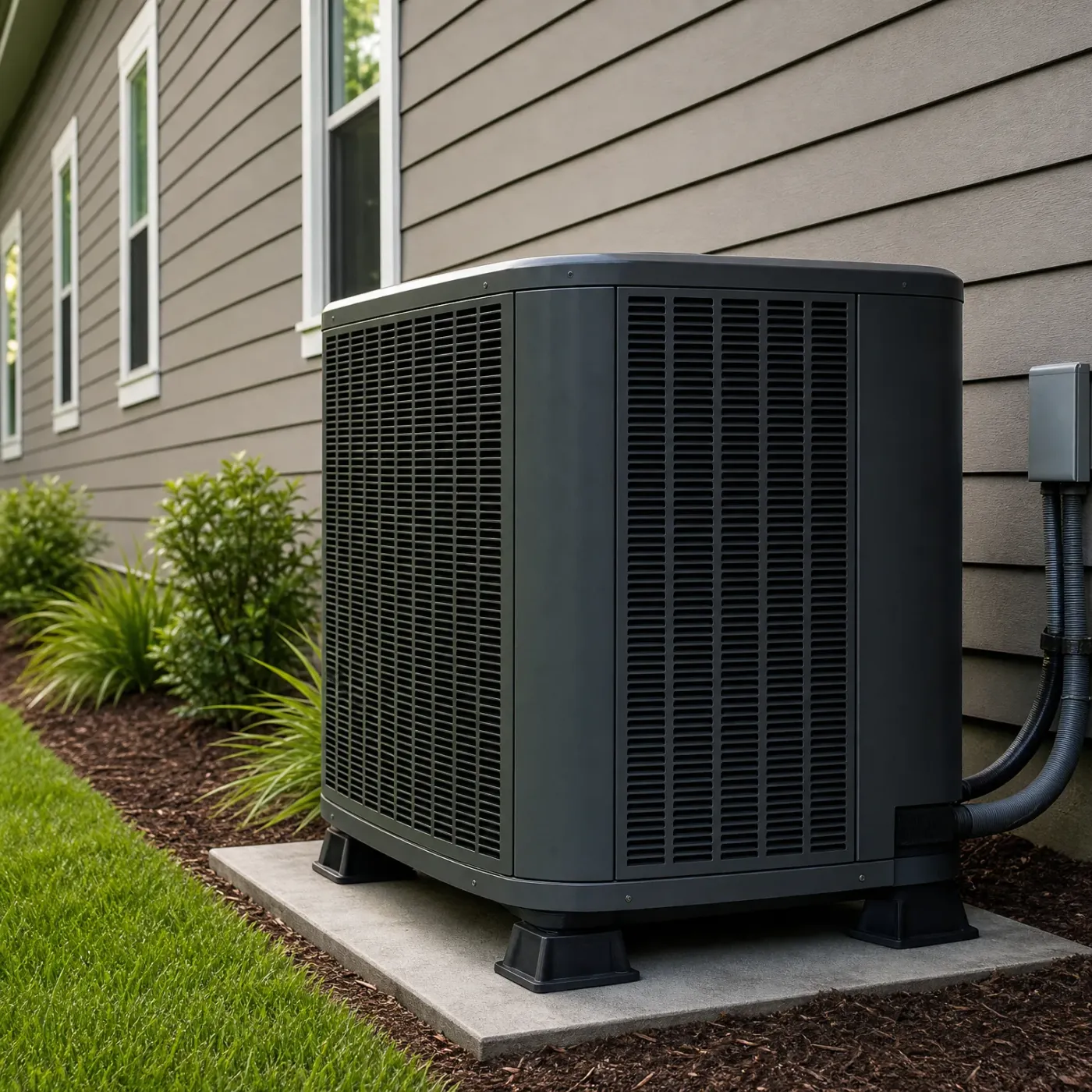
This is a heat pump holding a steady set point, line set and disconnect box tucked against the wall, fan grille clear. Nothing's iced over, nothing's straining. A unit kept up with maintenance looks about this plain, all winter.
Running on borrowed time
Weathered cabinet, lines exposed along the block foundation. A heat pump left unchecked loses efficiency quietly, then not so quietly, right when you need it most. Maintenance now is what keeps your unit looking like the first picture instead of this one.
Power costs 15.46 cents per kilowatt-hour statewide
At 15.46 cents a kilowatt-hour, every degree you ask the backup strip to cover costs more than the heat pump itself running longer at a steady set point. Holding one temperature all winter keeps that strip off and keeps your bill closer to what the heat pump alone would use.
EIA-861 2025 statewide residential average
Before: a unit kept clear and serviced through fall, coil clean, fan running quiet against the siding.
After: a unit caked in grime and left alone, coil blocked, straining to hold the house at your set point.
Summer here doesn't weigh on you the way it does elsewhere. NOAA puts the average summer dew point across Oregon at 52°F, which is why the air feels dry even on a warm afternoon. That matters for the same heat pump that's heating your house this winter, because it's the one unit doing both jobs. Light summer humidity means it isn't straining to pull moisture out of the air in July, so less wear carries into the months when you actually need it to hold heat. A heat pump that coasted through summer is in better shape to run steady through a cold snap without leaning on backup heat.
NASA POWER T2MDEW county cells weighted by homes
Service Now or Run the Risk
Skip the fall tune-up
The coil stays coated with whatever settled on it over summer, and a dirty coil pulls less heat from the outside air.
A weak capacitor or a low refrigerant charge won't show up as a shutdown, it shows up as the backup strip running more than it should.
The defrost cycle depends on sensors that drift out of calibration over time, and nobody checks them until the unit's already icing over.
A clogged filter makes the system pull harder for the same result, and that shows up on your bill before it shows up as a breakdown.
If the unit was already losing efficiency last winter, it starts this winter from further behind, not from even ground.
Get it serviced before winter
A cleaned coil pulls heat from the outside air the way it's supposed to, so the compressor isn't working harder for the same warmth.
A contractor checks refrigerant charge and electrical components before the cold sets in, not after something fails on a January night.
Defrost sensors get tested and reset, so the system clears ice on its own instead of running iced over and starved for airflow.
A fresh filter means the air moves the way the system was built to move it, without the compressor straining to compensate.
You're not searching for a contractor mid-breakdown, calling around for quotes, or explaining the same problem three times to three different companies.
1
Outdoor air passes over the coil and refrigerant inside absorbs its heat
2
The compressor squeezes that refrigerant until its temperature climbs higher
3
Hot refrigerant moves inside to the indoor coil and heats the air
4
A blower pushes that heated air through the ducts into your rooms
One setting, held steady, all winter
Pick a temperature in the mid 60s, set it before the cold arrives, and leave it there through the Oregon winter. That's the whole answer. A heat pump kept at one number stays off the backup strip, and a coil cleaned before the cold hit can actually pull the heat it needs from the outside air. Everything else on this page is just the reasoning behind that one line.
Finding someone to check the coil and the refrigerant charge before winter settles in is the part that eats your time, not the setting itself. You'd be calling around, explaining the same thing to three different companies, waiting on quotes that don't match up. Send this one form instead and that search is off your plate. You'll know where you stand without having done the sorting yourself.