Tell us about the job
Takes about a minute. No obligation.
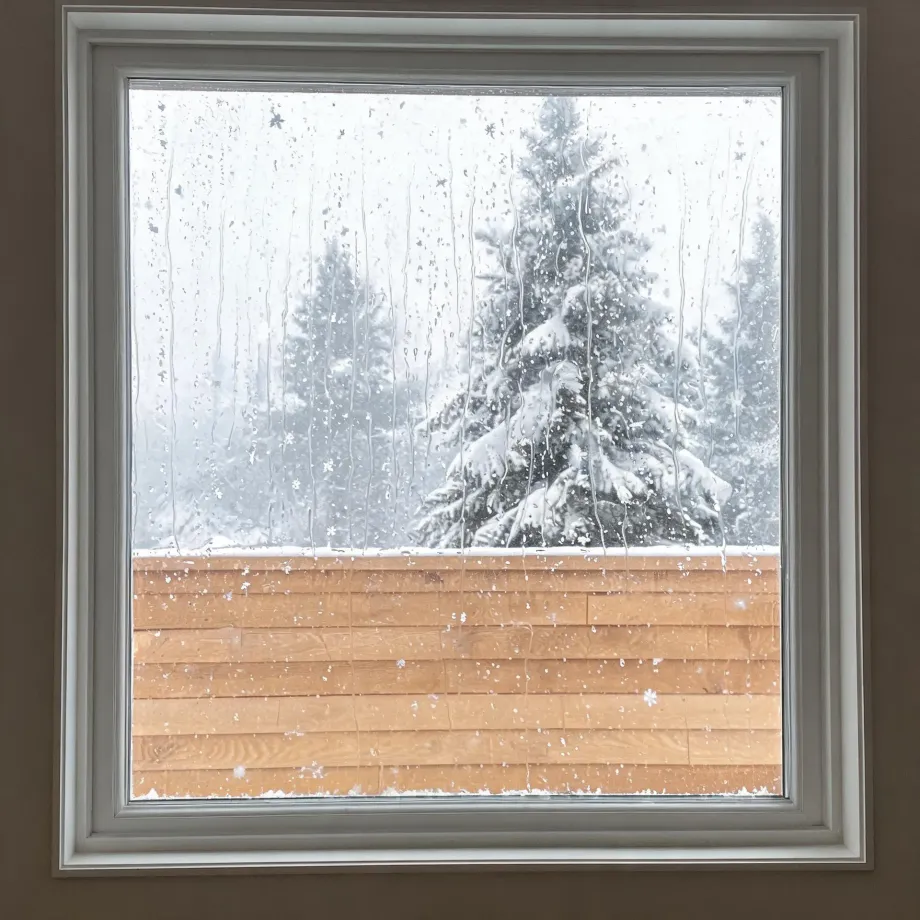
Sizing a heat pump for Grant County starts with what the outdoor coil is being asked to do when temperatures drop and capacity falls. Homes in Grant County, OR run heat about ten months a year, from September through June. Through the coldest part of that stretch, a heat pump loses output precisely when the house needs more, which makes back-up heat a real design question rather than an afterthought. A contractor has to work out where local temperatures cut into the unit's rated output, then spec the back-up element to cover that deficit without oversizing the whole system. Get that balance wrong at install and the auxiliary strips run longer than they should, every cold month, for the life of the equipment.
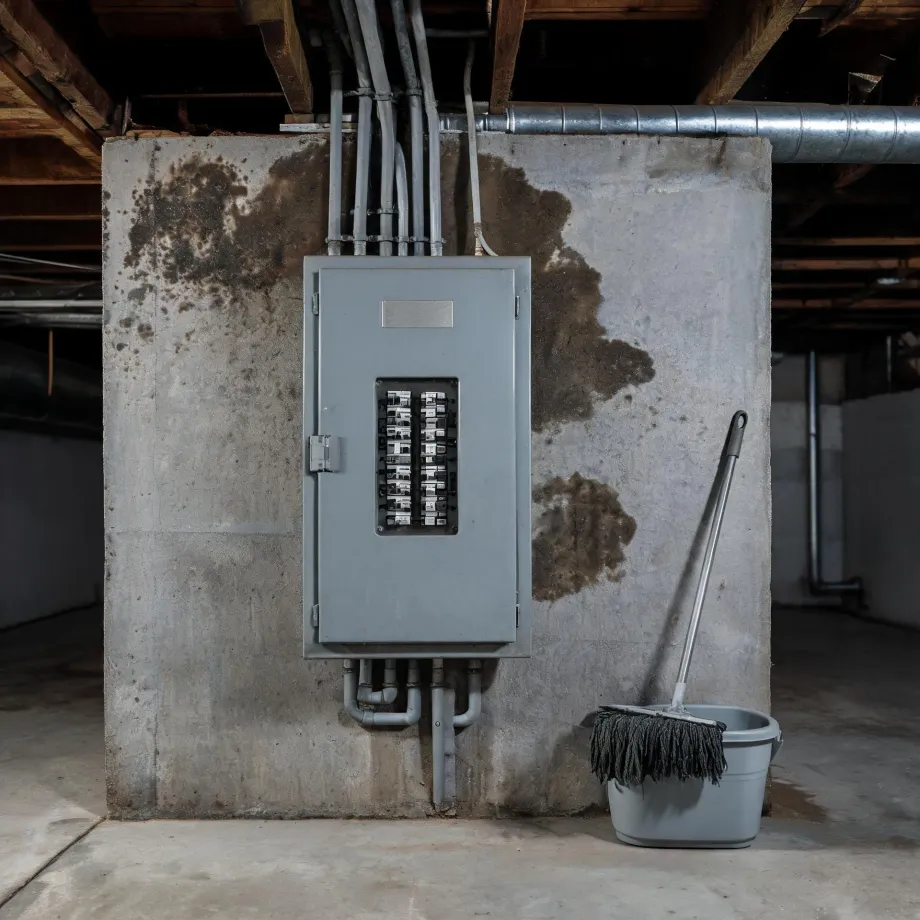
Ductwork sized for a furnace or a wood stove does not move air the way a heat pump needs it to. Half the homes in Grant County, Oregon were built in 1971 or earlier (2020-2024 ACS 5-year). That tells a contractor in Grant County that a house's existing duct runs are the first thing to open and measure, because passages that handled radiant or combustion heat were laid out on different assumptions about volume and return air. Electrical service is the second question: panels in stock of that vintage were not loaded for a heat pump's draw, and whether the service can carry it is not a number you find on a permit.
What Gets Installed With a New Heat Pump
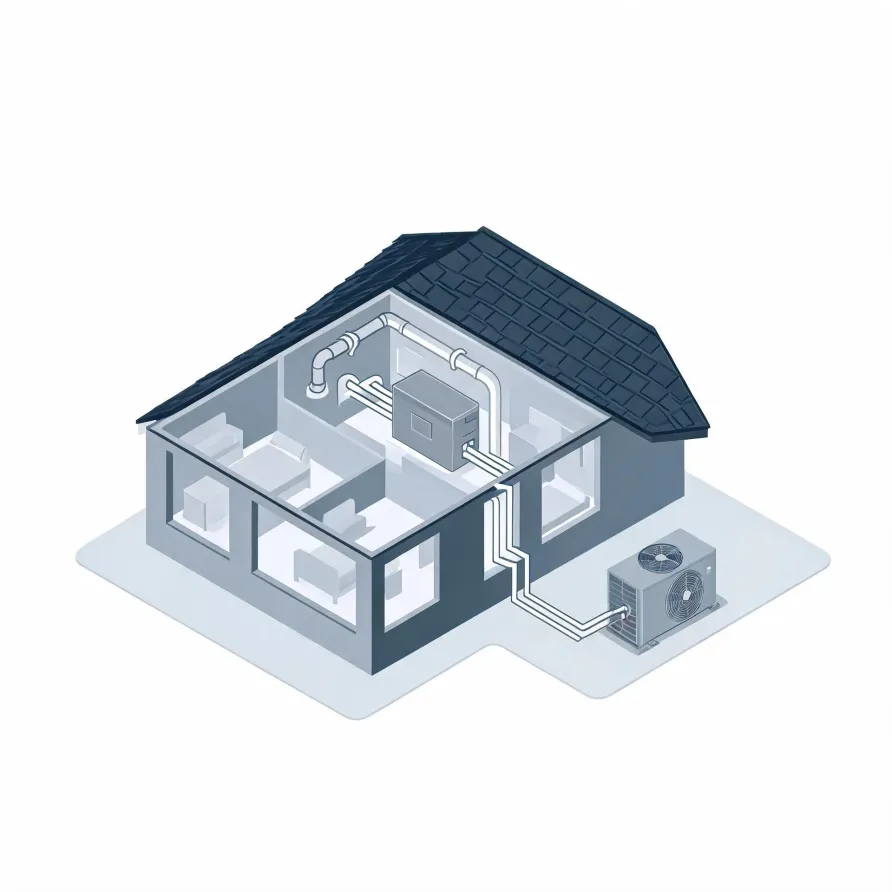
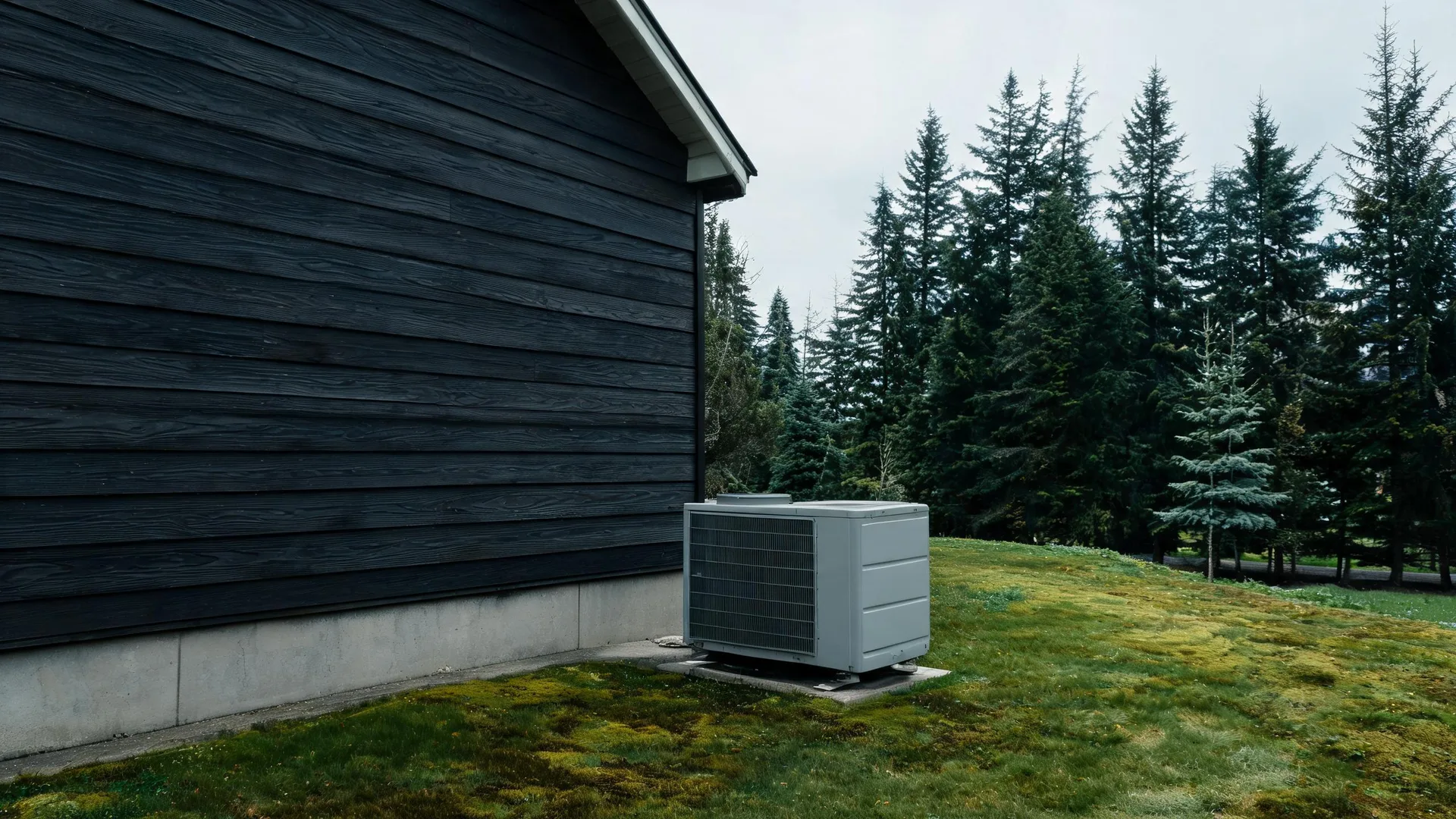
The outdoor unit is the piece a homeowner sees first, mounted on a pad beside the house, and it holds the compressor and the main coil that does the heat exchange. Inside, the air handler sits in a utility space, basement, or closet and pushes conditioned air through the home's supply vents. Together, these two units are the core of what a contractor puts in.
A refrigerant line set runs between the outdoor unit and the air handler, carrying the working fluid that ties the two sides together. A thermostat goes on an interior wall and gives the homeowner control over the whole system. The disconnect box and condensate drain line are also part of what a contractor places during a full install.
The drawing shows a typical layout, and a licensed contractor determines exactly how each piece fits the specifics of your house.
Get matched in Grant CountyGrant County, Oregon, by the numbers
82 severe weather events were recorded in Grant County, Oregon between 2015 and 2024.
NOAA National Centers for Environmental Information, Storm Events Database, bulk CSV export, events 2015-01-01 through 2024-12-31.Half the homes in Grant County, Oregon were built in 1971 or earlier (2020-2024 ACS 5-year).
U.S. Census Bureau, 2020-2024 American Community Survey 5-Year EstimatesGrant County, Oregon holds 4,157 housing units (2020-2024 ACS 5-year).
U.S. Census Bureau, 2020-2024 American Community Survey 5-Year EstimatesOwners occupy 76.7% of the occupied homes in Grant County, Oregon (2020-2024 ACS 5-year).
U.S. Census Bureau, 2020-2024 American Community Survey 5-Year EstimatesCodes & Standards Governing Heat Pump Installation in Grant County, Oregon2 sourced rules and standards
Licensing and Legal Requirements in Grant County, Oregon
Oregon’s contractor licence does not reach casual, minor or inconsequential work on one structure where the person’s contracts total less than $1,000 — and the exemption is unavailable to anyone who advertises or signs themselves as a contractor, at any price.
Oregon requires a current Construction Contractors Board licence, with the right endorsement, to undertake, offer to undertake or bid construction work.
Severe Weather Events in Grant County
Weather extremes put a direct load on heating and cooling equipment, shortening service life and widening the gap between a system sized for average conditions and one sized for local ones. In Grant County, that gap is a heat pump question.
82 severe weather events, 2015–2024. Source: NOAA National Centers for Environmental Information, Storm Events Database.