Tell us about the job
Takes about a minute. No obligation.
Sizing a heat pump for this county means solving a problem that does not show up on a spec sheet: outdoor air gets cold enough, long enough, that the system's heating capacity falls below what the house needs. Homes in Multnomah County, OR run heat about nine months a year, from October through June. A contractor has to calculate where that gap opens and how large it gets, then decide whether the unit, the backup heat strip, or both need to be scaled to cover it. Get that wrong and the backup resistance heat carries the load all winter, driving up bills and hiding the shortfall. The load calculation here is where the installation either works or does not.
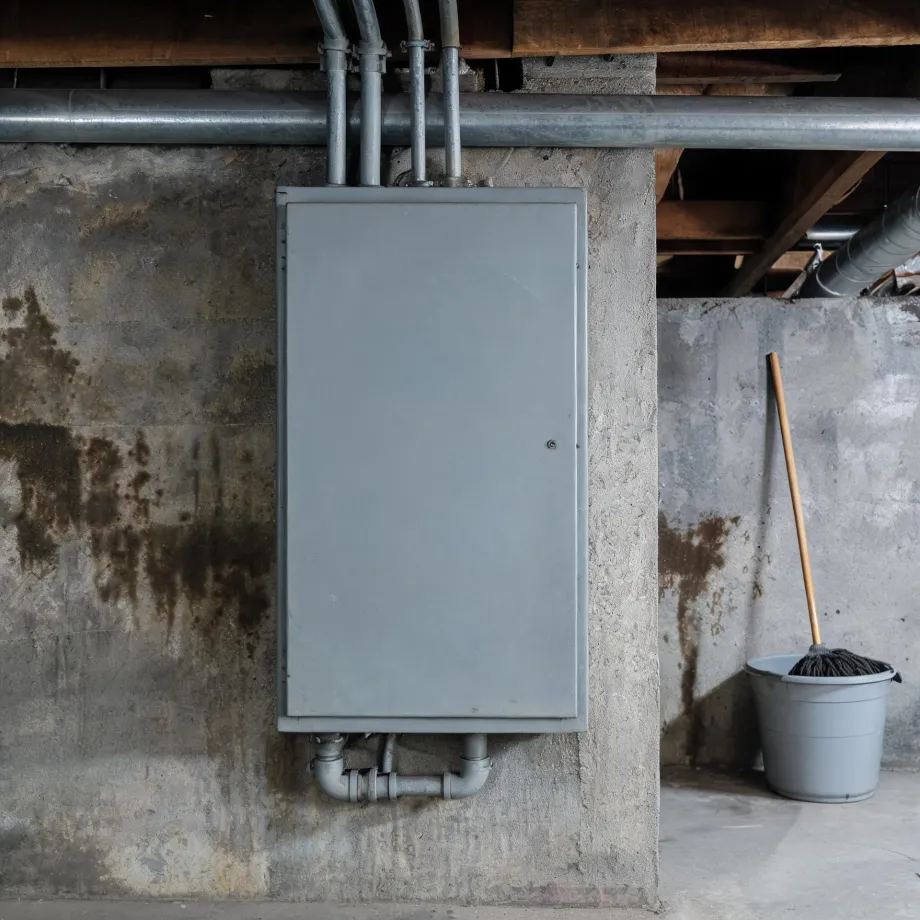
Ductwork laid down for a furnace and panel capacity sized for a smaller load are what a heat pump installation here runs into before the unit is even ordered. Half the homes in Multnomah County, Oregon were built in 1972 or earlier (2020-2024 ACS 5-year). That puts the electrical service on the critical path of any quote: a contractor assessing a home in this county checks whether the existing panel can carry the new load, and in many cases it cannot without an upgrade. The ductwork question sits alongside it, since systems designed around different static pressure and airflow requirements do not simply hand off to a heat pump without inspection.
What Gets Installed With a New Heat Pump
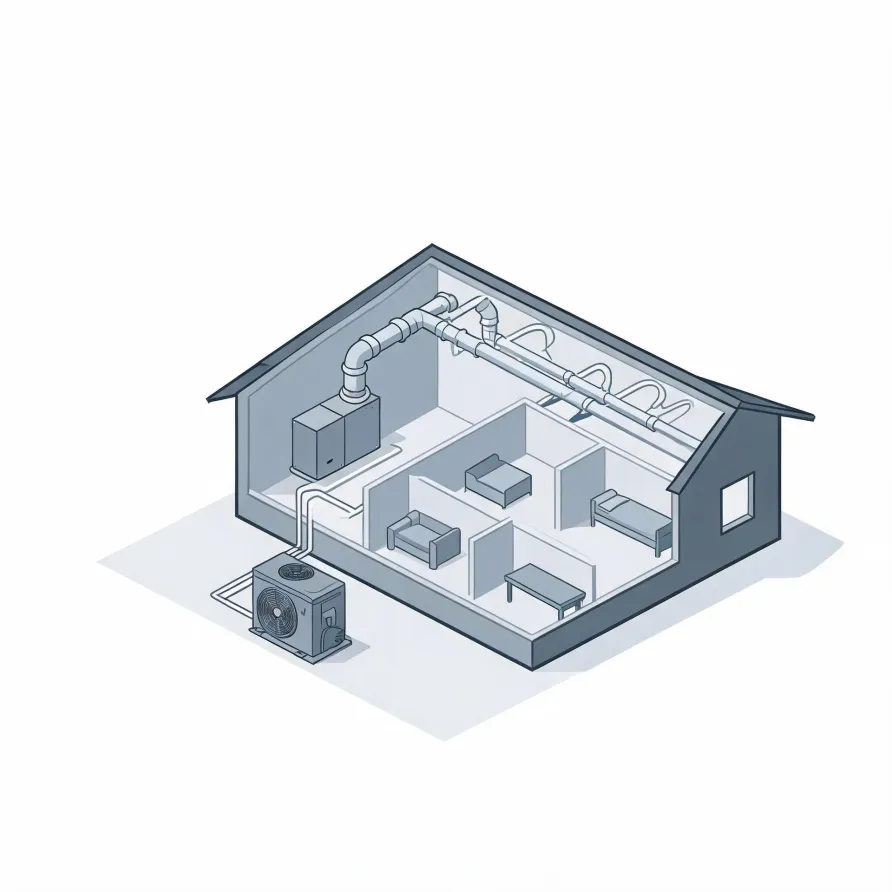
The outdoor unit is the piece most homeowners recognize first. It sits on a pad beside the house and holds the compressor and the outdoor coil. Inside, the air handler mounts in a closet, utility room, or attic and contains the indoor coil and the blower that moves conditioned air through the home.
A refrigerant line set connects the two units, running through the wall or ceiling between them. A thermostat goes on an interior wall and gives the homeowner control over the whole system. The condensate drain line runs from the air handler to a floor drain or outside, carrying away the moisture the indoor coil pulls from the air.
The drawing shows a typical layout, and a licensed contractor determines exactly what applies to your house.
Get matched in Multnomah CountyMultnomah County, by the numbers
49 severe weather events were recorded in Multnomah County, Oregon between 2015 and 2024.
NOAA National Centers for Environmental Information, Storm Events Database, bulk CSV export, events 2015-01-01 through 2024-12-31.Half the homes in Multnomah County, Oregon were built in 1972 or earlier (2020-2024 ACS 5-year).
U.S. Census Bureau, 2020-2024 American Community Survey 5-Year EstimatesMultnomah County, Oregon holds 371,179 housing units (2020-2024 ACS 5-year).
U.S. Census Bureau, 2020-2024 American Community Survey 5-Year EstimatesOwners occupy 53.4% of the occupied homes in Multnomah County, Oregon (2020-2024 ACS 5-year).
U.S. Census Bureau, 2020-2024 American Community Survey 5-Year EstimatesHeat Pump Installation Rules & Codes for Multnomah County, Oregon2 sourced standards and regulations
Licensing and Legal Requirements in Multnomah County, Oregon
Oregon’s contractor licence does not reach casual, minor or inconsequential work on one structure where the person’s contracts total less than $1,000 — and the exemption is unavailable to anyone who advertises or signs themselves as a contractor, at any price.
Oregon requires a current Construction Contractors Board licence, with the right endorsement, to undertake, offer to undertake or bid construction work.
Severe Weather Events in Multnomah County
Local weather puts real demands on heating and cooling equipment, and those demands shape what a heat pump needs to handle over its working life. Sizing and installation decisions are local decisions, and the weather record for this area is part of that picture.
49 severe weather events, 2015–2024. Source: NOAA National Centers for Environmental Information, Storm Events Database.