
Done looking for a heat pump pro
Is a cold-climate heat pump worth it in Oregon
A cold-climate heat pump has to earn its keep through an Oregon winter, not just a mild one. This page gets into what makes that model different, and whether it makes sense when most homes here already heat with electricity and power costs are nothing out of the ordinary. Send the form and skip the work of finding someone to ask.
Hand it offYes, for most homes in Oregon. A cold-climate heat pump keeps producing heat well below freezing, down into single digits for the better models, instead of leaning on backup resistance heat the way a standard heat pump does once the outdoor coil can't pull enough warmth from the air. Since most homes here already heat with electricity, that difference shows up directly in what you pay each month, not just in comfort. A standard heat pump isn't wrong for Oregon's winters, but it works harder on the coldest nights and shifts more of the load onto backup heat strips, which cost more to run than the compressor itself. If your current system struggles once temperatures drop and stays running constantly, or if you're replacing it anyway, a cold-climate model is worth the difference. If it keeps up fine through your coldest stretches, it may not be.


A standard heat pump gives up on cold air sooner than most people expect. Somewhere around 25 to 35 degrees outside, the outdoor coil can't pull enough warmth out of the air, so the system falls back on electric resistance heat to make up the difference. A cold-climate model handles that same cold air differently. Its compressor is variable-speed, so instead of shutting off or switching to backup, it ramps up and pushes more refrigerant through the system as the temperature drops. Some models go a step further with vapor injection, adding extra refrigerant partway through the compression cycle to keep the heat output from falling off. That extra capacity means the backup strip or furnace sits idle more often through the winter. The outdoor coil still has to defrost in freezing, damp weather, which briefly reverses the cycle and draws a little heat back out of the house. And none of this replaces correct sizing. A cold-climate compressor in an undersized unit still ends up leaning on backup heat on the coldest nights.
How a cold-climate compressor keeps up
- A standard heat pump switches to electric resistance heat once the outdoor coil can no longer pull enough warmth from the air, usually somewhere in the 25 to 35 degree range.
- A cold-climate heat pump uses a variable-speed compressor that ramps up instead of shutting off, pulling more refrigerant through the system as the outside air gets colder.
- Some cold-climate models inject extra refrigerant partway through the compression cycle, a step called vapor injection, which keeps the heat output up at low temperatures.
- Because the compressor is doing more of the work at low temperatures, the backup heat strip or furnace stays off more hours through the winter.
- The outdoor coil still has to defrost periodically in freezing, damp weather, which briefly reverses the cycle and pulls heat from inside for a few minutes at a time.
- Sizing still matters as much as the compressor technology, since a unit that is too small still has to lean on backup heat on the coldest nights.





It's off your list after this
Answer a few questions instead of calling shop after shop.
Send the form and the search for an installer is over.
Asking costs nothing, and the choice to hire stays yours.
Standard vs. Cold-Climate Heat Pump
Standard heat pump
- Backup resistance heat kicks in once the outdoor coil can't keep up, usually somewhere in the 25 to 35 degree range.
- On the coldest mornings, more of the heat in your house is coming from that backup element than from the heat pump itself.
- The compressor runs at one or two fixed speeds, so it can't throttle down to match a mild afternoon or ramp up for a cold snap.
- It still heats a typical Oregon winter fine most days, since hard freezes here don't last as long as they do elsewhere.
- Install cost tends to run lower than a cold-climate model, since the compressor and controls are simpler.
Cold-climate heat pump
- The variable-speed compressor keeps pulling heat from outside air down into the single digits, so backup heat rarely has to carry the load.
- Because it ramps instead of switching on and off at one speed, it matches what the house actually needs on a 40 degree day and on a 20 degree night.
- Since most Oregon homes already heat with electricity, the difference shows up as less reliance on resistance heat rather than a fuel switch.
- It costs more to install than a standard heat pump, since the compressor and controls are built to do more.
- On the handful of nights that drop well below freezing, it's still doing the work a standard system would hand off to backup heat.
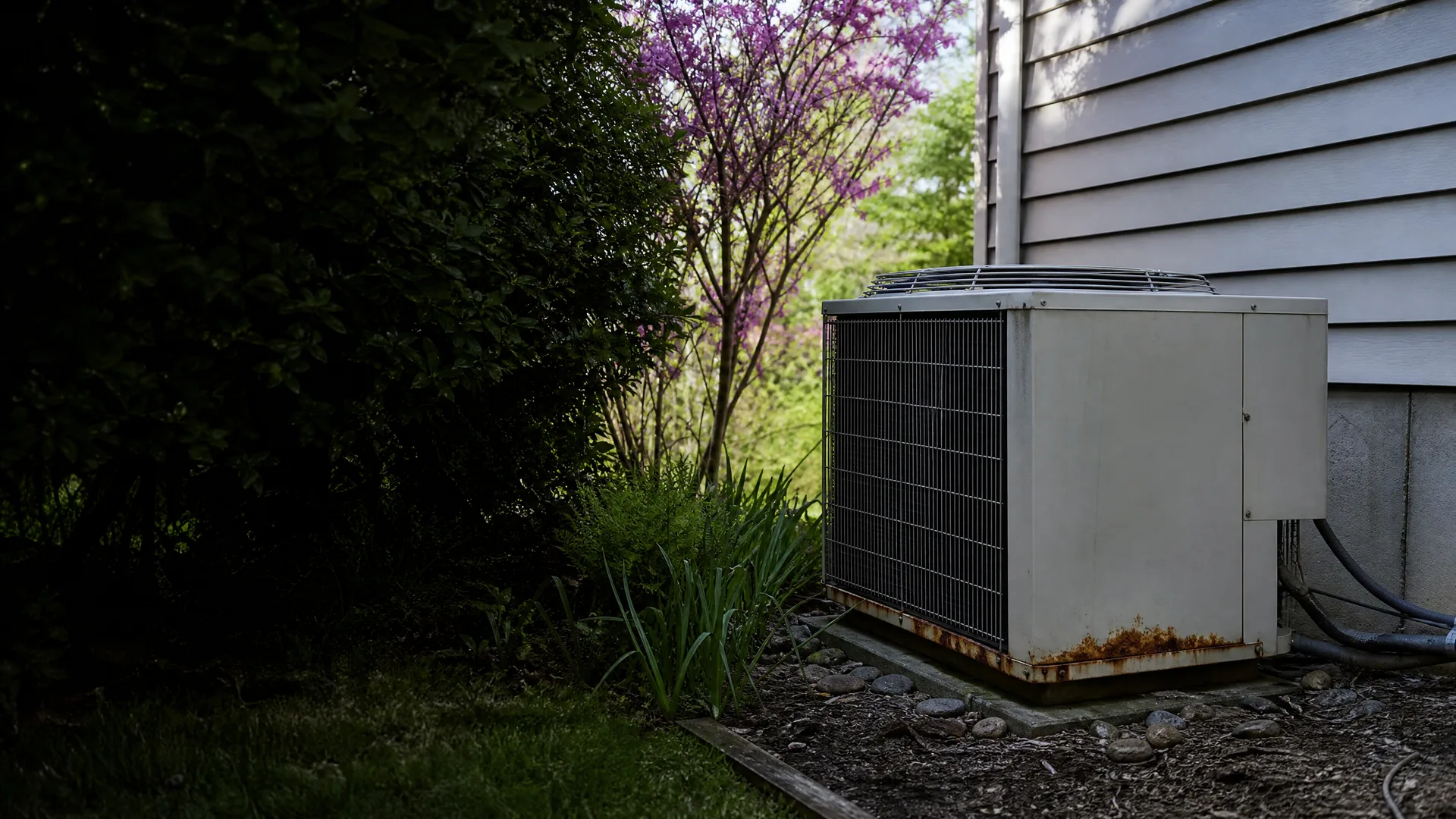
You catch sight of it on your way to the side gate, a Tuesday in March with the first real sun in weeks. The outdoor unit sits where it's always sat, and now that the snow's gone you notice the rust creeping along the base panel, a line of it right where the metal meets the pad. The fan spins fine when it kicks on. But you crouch down and see the rust has gone past the paint, into the seams. You think back to January, to the mornings it ran almost the whole time without the house ever feeling quite warm enough. Spring makes it easy to forget winter was hard on this thing.
Power costs 15.46 cents per kilowatt-hour statewide
At 15.46 cents a kilowatt-hour, every degree your heat pump doesn't have to make up with backup heat shows up on the bill. A cold-climate model holds its output further into a cold snap, so less of your winter heat comes from the expensive strip heat behind it.
EIA-861 2025 statewide residential average
Where this leaves you
- A cold-climate heat pump keeps heating your home well below freezing instead of handing the job to backup resistance heat.
- Since most homes in Oregon already heat with electricity, this is a swap in equipment, not a switch in fuel.
- Power here runs 15.46 cents a kilowatt-hour, so cutting strip heat use shows up directly on the bill.
- A standard heat pump leans on backup heat once temperatures drop into the 25 to 35 degree range, a cold-climate model does not.
- Oregon winters give that gap between the two systems room to matter, not just on the coldest night of the year.
- The outdoor unit keeps working through the stretch of winter where a standard heat pump would already be leaning on backup heat.
A cold-climate heat pump is worth it for most homes in Oregon. The reason comes down to what the outdoor unit can still do once the temperature drops. A standard heat pump hands the job to backup resistance heat somewhere in the 25 to 35 degree range, and from that point on you're paying for strip heat, not heat pump output. A cold-climate model keeps pulling heat from the outdoor air well past that point, so the equipment you already have installed keeps doing the work instead of stepping aside for something more expensive to run. Because most homes here already heat with electricity, this isn't a decision about switching fuels or rethinking how your house is heated. It's a decision about which heat pump is doing that job, and how much of a typical Oregon winter it can get through on its own. At 15.46 cents a kilowatt-hour, every hour your system spends leaning on backup heat instead of the compressor is an hour that costs more than it has to. Oregon winters aren't just one cold night to get through. They're a stretch of weeks where a standard system is already falling back on backup heat while a cold-climate one is still working the way it's supposed to. That gap is where the difference shows up, not just on the coldest morning of the year but across the whole season.


Heat Pump Installation
Stop chasing a heat pump pro
Skip the round of in-home estimates for a new heat pump.
