One form instead of hunting for a pro who does heat pump tune-ups.
Your heat pump runs most of the year here. It carries the heat all winter since most homes in Oregon heat with electricity, and it switches over to keep the house cool through the warm months too, even though the air never gets as heavy as it does elsewhere. A tune-up checks that it's ready for both jobs, not just one.
A technician looks at the outdoor unit first, since that's where a lot of the strain shows up: the coil, the fan, the refrigerant charge. Inside, they check the air handler, the filter, and the electrical connections that wear down with constant cycling. They'll test that the reversing valve actually switches the system between heat and cool, since that part doesn't get exercised on a furnace or a straight AC.
Finding someone qualified to do this isn't always simple. You could spend an afternoon searching for heat pump contractors near you, calling a few, explaining the same thing about your system to each one, then waiting on quotes to compare before you even know who's available. That work disappears here. You tell us once what you have and where you live, and the request goes to a contractor local to you who works on heat pumps all season, in both directions, and knows which parts tend to give out first in this climate.
You're not handed off to a call center or left sorting through bids from companies you've never heard of. One licensed contractor gets your request, not five competing for it, so your phone isn't the one ringing off the hook afterward. That contractor already knows the kind of wear Oregon's switch between mild winters and warm summers puts on a heat pump, because it's what they see all year.
From here, the next step is simple: tell us a little about your system and let the right contractor take it from there.
What does a heat pump tune-up actually include?
A heat pump works harder in Oregon than a central air conditioner does in a milder climate, since it's running the house most of the year on electric heat and then on cooling too. Before you book anything, it helps to know what a technician actually checks and does during a tune-up, instead of paying for a visit that just amounts to a quick look and a bill.
It covers both sides of the system, since your heat pump heats and cools
A tune-up on a heat pump means checking the refrigerant charge, cleaning the outdoor coil, testing the reversing valve that switches it between heating and cooling, and checking the defrost cycle that keeps the outdoor unit from icing up in winter. The technician also checks electrical connections, the condensate drain, and airflow across the indoor coil. Because your system runs on electricity and carries the house through winter, a weak defrost cycle or a dirty coil shows up as a higher bill before it shows up as a breakdown. The tune-up catches that early, and checks the parts that wear from year-round use rather than the few months a furnace or straight air conditioner would run.
The outdoor coil and refrigerant charge
A contractor checks the outdoor coil for dirt and bent fins, since a blocked coil makes the system pull heat from outside air less efficiently in winter and dump heat less efficiently in summer. They'll also check refrigerant charge. A heat pump low on refrigerant has to run longer to reach the same temperature, and in a system that's working year round, that adds up fast on an electric heat bill.
Defrost cycle and reversing valve
Your heat pump has a reversing valve that switches it between heating and cooling, and a defrost cycle that melts frost off the outdoor coil in winter. A contractor tests both. A reversing valve that sticks can leave you with no heat on a cold morning. A defrost cycle that doesn't trigger right lets ice build up on the coil until the system can't pull heat from the air at all.
What skipping it costs you
A heat pump that's low on charge or running a dirty coil doesn't shut off and tell you something's wrong. It just runs longer to do the same job. You'll notice it on the electric bill before you notice it in the house, since most homes here are heating with electricity and that system is working through the winter and into the warm months too. A frozen outdoor unit or a system short cycling in January is the kind of thing that shows up as a bigger problem later, not a smaller one.
Finding someone to look at it is its own chore. You'd normally be searching around, calling a few places, explaining the same thing about your system two or three times, then sitting with quotes trying to work out which contractor actually knows heat pumps and which one mostly works on furnaces. Booking through here skips that part. You get matched with one licensed Oregon contractor who services this equipment all year, not a handful of companies competing for the job, and not a list you have to sort through yourself.
1
Contractor checks the thermostat calls for heat or cool correctly
2
Outdoor coil gets inspected and washed clean of debris
3
Refrigerant charge gets checked against the system's rated pressure
4
Reversing valve gets tested to confirm it switches modes cleanly
A clean coil and the right charge, so the unit pulls heat from outside air all winter without straining.
Rust on the grille and dirt packed around the base, a sign the coil underneath hasn't been washed in years.
A licensed local pro takes the request for your heat pump tune-up.
It costs nothing to send, and you don't have to hire anyone.
Tune-up done once a year
A contractor checks the coil, the charge, and the reversing valve on schedule, before anything's gone wrong. The system keeps running the way it's supposed to through the next few months of heating and the months of cooling after that. If something's starting to wear, like a contactor pitting or a capacitor reading low, it turns up while it's still a small job. You're not guessing about the unit outside. Someone who works on these year-round has looked at it and told you where it stands.
No tune-up, system runs anyway
The heat pump doesn't stop working because it missed a check. It just runs longer to move the same heat, pulling more power to do it, and nothing in the house tells you that's happening. A coil packed with debris or a charge that's drifted low won't trip a warning. It shows up as a higher electric bill first, since the house heats on electricity here, and later as the compressor working harder than it should for years until something in it finally gives out.
Skip it another year
The system keeps running, but a coil that's been dirty for a while or a charge that's drifted costs more electricity every month it goes unchecked, winter and summer both.
Power costs 15.46 cents per kilowatt-hour statewide
At 15.46 cents per kilowatt-hour, every extra hour your heat pump runs to make up for a dirty coil or a low charge lands right on the bill. Since the system carries your heating and cooling both, that extra runtime adds up across the whole year, not just one season.
EIA-861 2025 statewide residential average
Running clean
The cabinet is clear and the fins underneath are open, so air moves through the coil the way it's built to. The disconnect box and lines are dry, no residue dripping down from above. A unit like this pulls heat from the outside air in January without fighting for it.
Running dirty
That grime on the cabinet usually means the fins underneath are packed with it too. Air can't cross a coil like that the way it needs to, so the unit runs longer to move the same heat. Nothing on the outside tells you to call. The bill does.
Before you get your heat pump maintenanceAfter you get your heat pump maintenance
A summer dew point of 52°F in Oregon is low. The air doesn't hold much moisture, so your heat pump isn't working to wring water out of the house on top of cooling it. That's different from a humid climate, where the unit runs long cycles just to pull moisture down before the room even feels cooler. Here it can satisfy the thermostat and shut off. That matters more in winter anyway, since the same coil has to pull heat from outside air for months on end. A dry Oregon summer is the easy half of this system's year. Winter is where a dirty coil or a low charge actually shows up on your bill. Source: regional climate averages for Oregon.
NASA POWER T2MDEW county cells weighted by homes
Why does your heat pump sound different lately?
You might hear it run longer than it used to, cycling on through the afternoon instead of kicking off. Maybe there's a hiss near the outdoor unit, or frost building up on the coil that doesn't clear on its own. Inside, a room that used to warm up fast now takes a while, or the air coming out feels cooler than it should on a cold morning. None of this trips a breaker or throws a code on the thermostat. The system just keeps working, using more power to get there. Left alone, a coil caked with debris or a charge that's drifted low wears on the compressor, and that's the part that's expensive to replace.
Running as it should
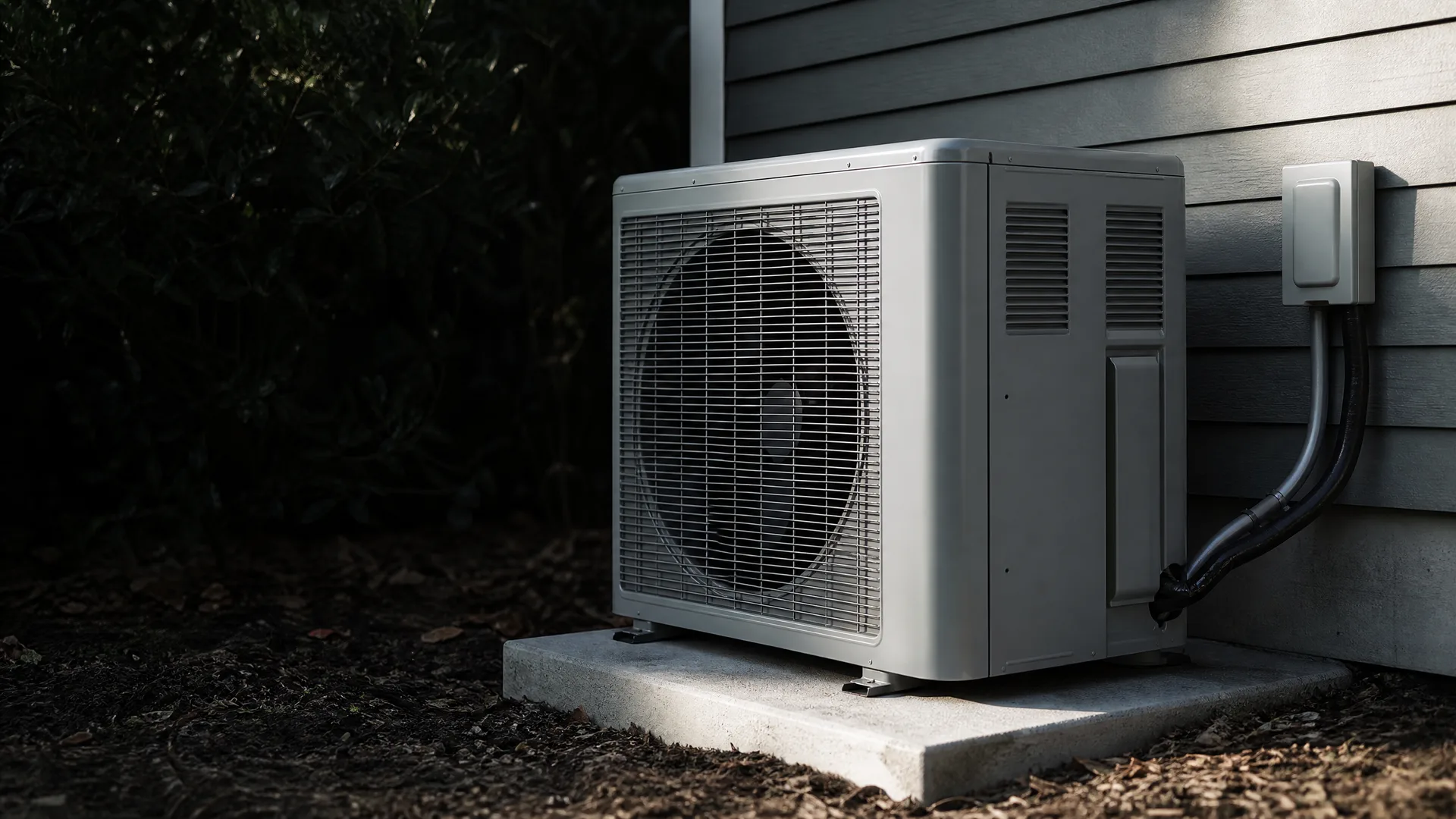
The unit sits clean on its pad, lines and conduit running straight to the disconnect box. Nothing's dripping, nothing's rusted. A heat pump kept up this way pulls heat from the outside air all winter and switches to cooling in summer without extra strain on either end.
Worn down from skipped years
The cabinet's faded and streaked, years of weather on a coil nobody's opened up. It still runs, calling for heat or cool same as the other one, but it's working harder to do it. That difference shows up on the electric bill before it shows up as a breakdown.
A tune-up covers the same ground every time: the coil gets washed, the charge gets checked against what the system is rated for, the reversing valve gets tested, the thermostat calls are confirmed. That's what keeps a heat pump pulling heat from outside air all winter and cooling the house all summer without running longer than it should. Finding someone to do that is its own chore, calling around, explaining what you have, waiting on quotes from companies that don't know your equipment. The contractor who picks this up is local and licensed, works on heat pumps all year in homes around you, and knows which part tends to go first on a system like yours. One contractor, one visit, not a list of calls to sort through. Your heat pump already does most of the work in this house, heat in winter, cooling in summer. A tune-up is just making sure it keeps doing that without costing you more than it should on the electric bill.