
Why your heat pump runs nonstop in an Oregon winter
A heat pump that runs nonstop in an Oregon winter is usually doing exactly what it's built to do. Below about 35 to 40 degrees, a heat pump pulls less heat out of the outside air with every pass, so it has to run longer and more often to hold the temperature you set. That's normal on the cold mornings. What isn't normal is when it runs nonstop for days and the house still feels cool, or the outdoor unit is caked in ice that doesn't clear during its defrost cycle. That points to something else: low refrigerant, a failing defrost control, a dirty outdoor coil, or a thermostat asking for more heat than the system can deliver on its own. If your house still feels right and the power bill isn't out of line, the long runtime is just the system working through the cold. If it isn't keeping up, that's a repair, not weather.


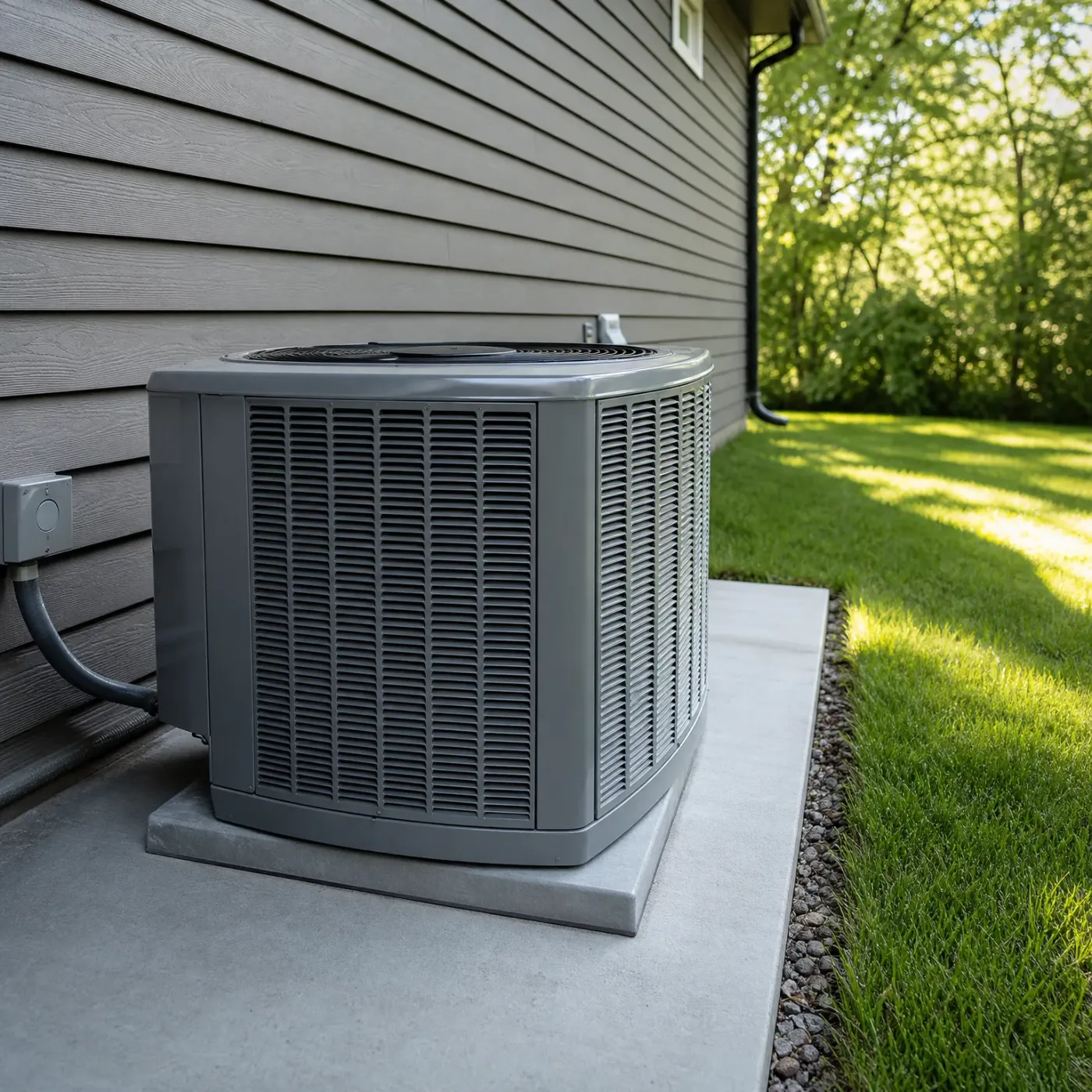
The outdoor unit is pulling heat out of cold air through a refrigerant coil, and the thermostat is what decides how long the compressor stays on to get there. Every so often the reversing valve flips the system into defrost, running hot gas backward through the outdoor coil to strip off frost. The outdoor fan stops during that, and you'll feel a few minutes of cool air from the vents, not warm. None of that is the system struggling. Where it gets worked harder than it should is the thermostat. Push the setpoint up several degrees at once and the heat pump calls for heat straight through instead of in the normal short runs a steady setpoint gives you. Backup strips or a furnace are there to pick up the coldest mornings, and if that backup isn't kicking in, the heat pump is running long trying to cover the gap by itself. A system that's low on refrigerant, or whose coil won't shed frost the way it should, will run far longer than the temperature outside explains.
How a heat pump actually runs
- The outdoor unit pulls heat from the air with a refrigerant coil, and the thermostat decides how long the compressor runs to meet the setpoint.
- A reversing valve switches the system between heating and defrost, sending hot gas back through the outdoor coil to melt frost off it.
- During defrost, the outdoor fan shuts off and indoor air can feel cool for a few minutes since the heat pump isn't heating the house at that moment.
- A thermostat set to recover several degrees at once can call for heat continuously instead of in the shorter cycles that come with a steady setpoint.
- Backup heat strips or a furnace are meant to carry extra load on the coldest mornings, and a heat pump running alone below that point will run long to compensate.
- A low refrigerant charge or a coil that can't shed frost properly forces the compressor to run far longer than the outdoor temperature alone would explain.


Skip calling around

Only one pro gets your request, so you hear from one company.
You're not committing to anything by asking.

Backup heat strips kick in
Most heat pumps in Oregon have electric resistance strips built into the air handler for when the outdoor coil can't keep up. They're meant to run for short stretches on the coldest mornings. If your system leans on them for hours at a time, something upstream isn't working right, like a stuck reversing valve or a compressor that's lost capacity, and the strips are covering for it.

Defrost cycles tell a story
A healthy system goes into defrost on a timer or a sensor reading, runs for several minutes, then switches back to heating. If you watch the outdoor unit and it's icing up faster than it clears, or the fan stops without the frost ever melting off, the defrost board or a sensor on the coil may not be reading the coil's temperature correctly, and the compressor ends up working against ice instead of air.
How does the thermostat know how long to run the compressor?
You keep watching the thermostat, waiting for it to decide the house is warm enough, and it just doesn't. The compressor runs and runs. You're wondering if the thermostat itself is broken, stuck reading the wrong number, or if it's working fine and the house is just losing heat faster than the system can replace it on a cold night.
It compares the room to the setpoint, not the weather outside
The thermostat only knows one thing: the temperature of the air around its sensor compared to the number you set. It closes the circuit to the compressor when the room reads below setpoint and opens it when the room catches up. It has no way to know that it's 28 degrees outside or that the coil is working harder than it was in October. On a cold night the house loses heat faster than the system can replace it, so the room never quite reaches setpoint, and the thermostat keeps calling for heat because that's exactly what it's built to do. A long run isn't the thermostat malfunctioning. It's the thermostat doing its job while the equipment struggles to keep up.

Compressor draws refrigerant into the outdoor coil to gather heat.
Reversing valve sends that heat inside through the air handler coil.
Outdoor coil gets colder than the air and frost forms on it.
Defrost cycle reverses the valve and warms the coil to melt frost.




Power costs 15.46 cents per kilowatt-hour statewide
At 15.46 cents a kilowatt-hour, every extra hour your compressor runs shows up on the bill. A heat pump that's cycling properly still costs something to run on a cold morning, but one stuck running nonstop is pulling power the whole time it should be resting.
EIA-861 2025 statewide residential average



A heat pump that won't stop running is telling you something specific
Most of the time, nonstop running in an Oregon winter means one of a short list of things: a stuck reversing valve, a defrost control that isn't cycling the way it should, a coil that's lost its charge, or heat strips picking up a load the compressor should be handling alone. None of those get better by waiting. You've read through what's likely going on with yours, and that's the hard part done.
What's left is getting someone out to look at the unit itself, and that's usually where the evenings go: searching for a contractor who actually works on heat pumps rather than furnaces, calling two or three, telling each one the same story about the vents and the bill, then sitting with quotes that don't line up because no two of them looked at the same thing. A local contractor who services this equipment all winter can usually tell you what's happening after a look at the coil and the thermostat, without you repeating yourself to a second or third company.

Describe it once
Your request stays with one local pro.
It costs nothing to send, and you don't have to hire anyone.